Screens
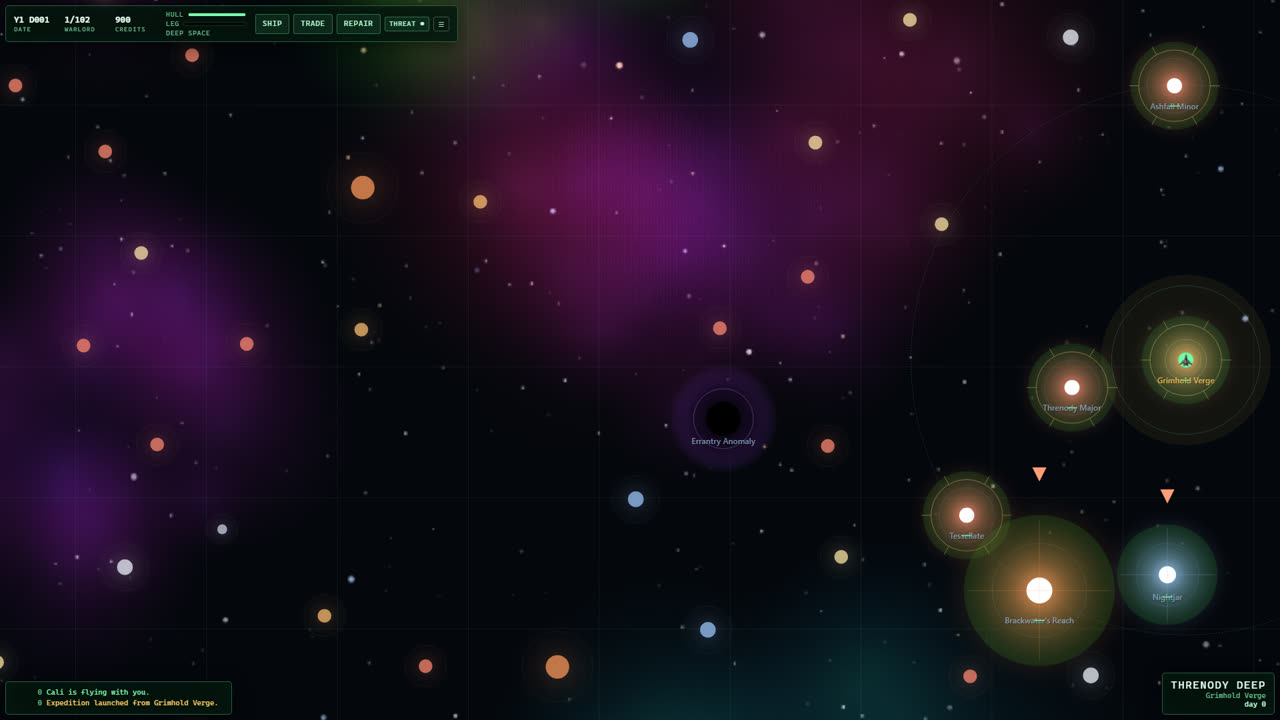
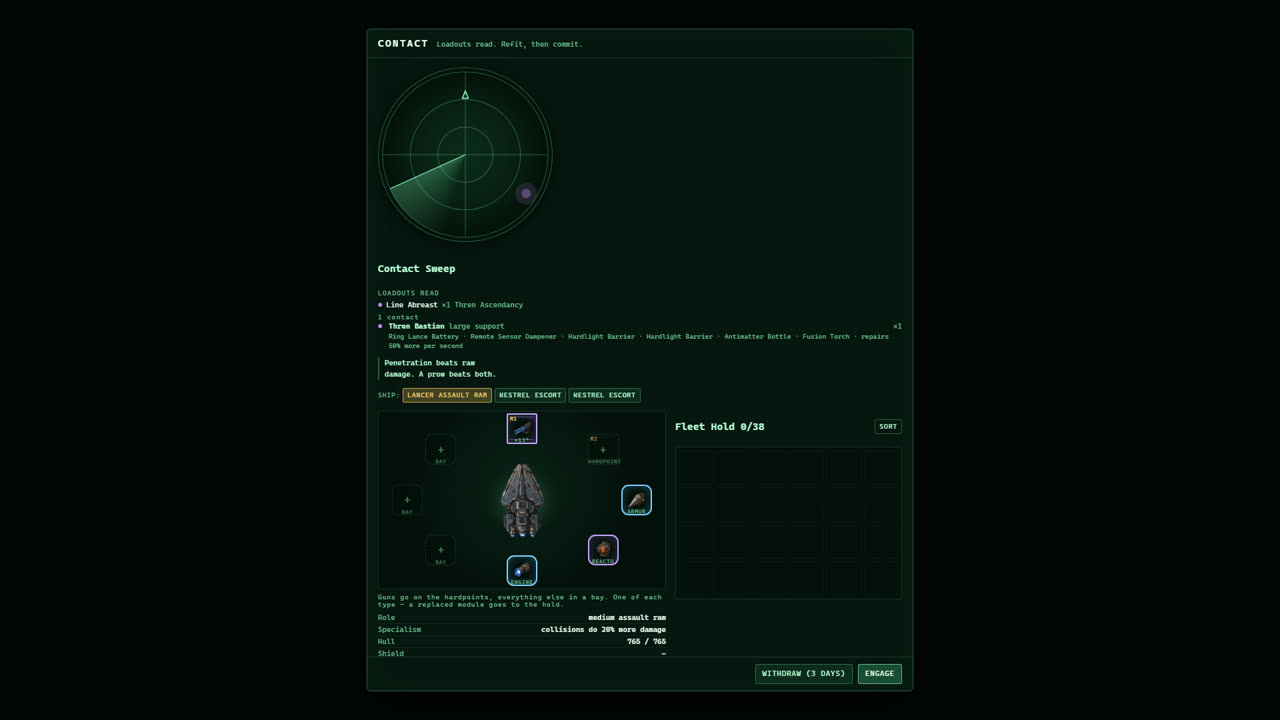
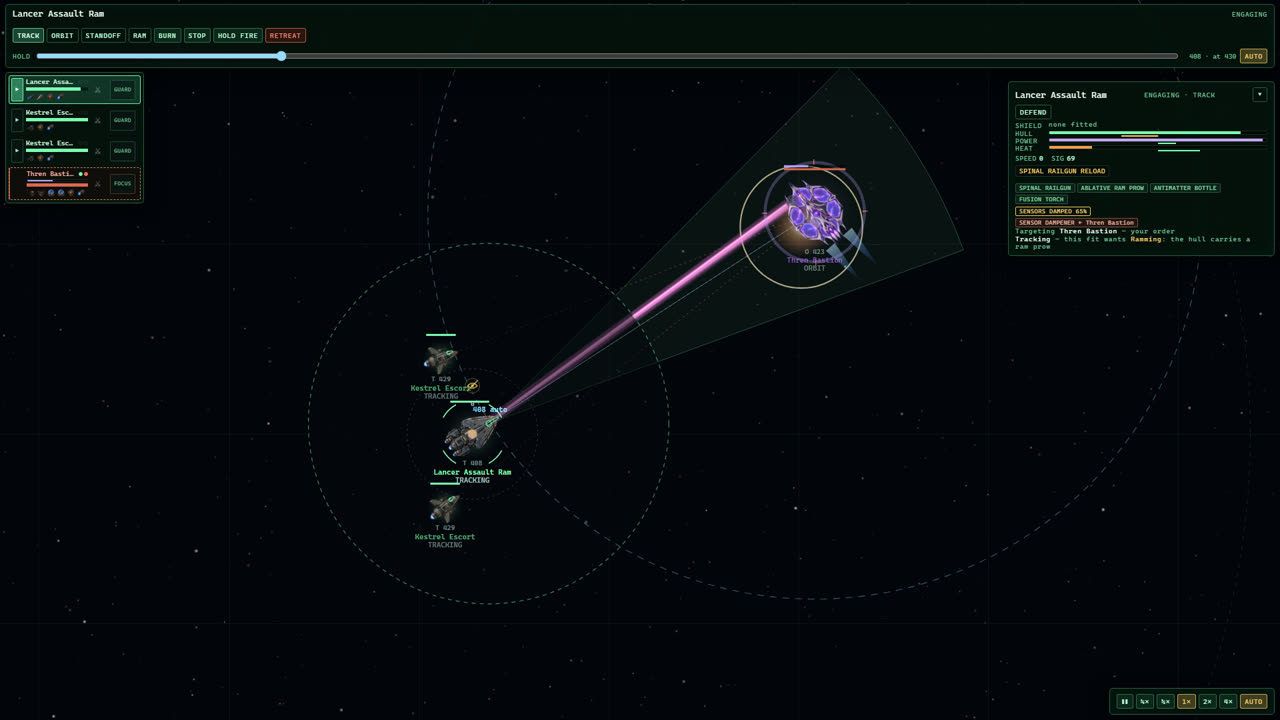
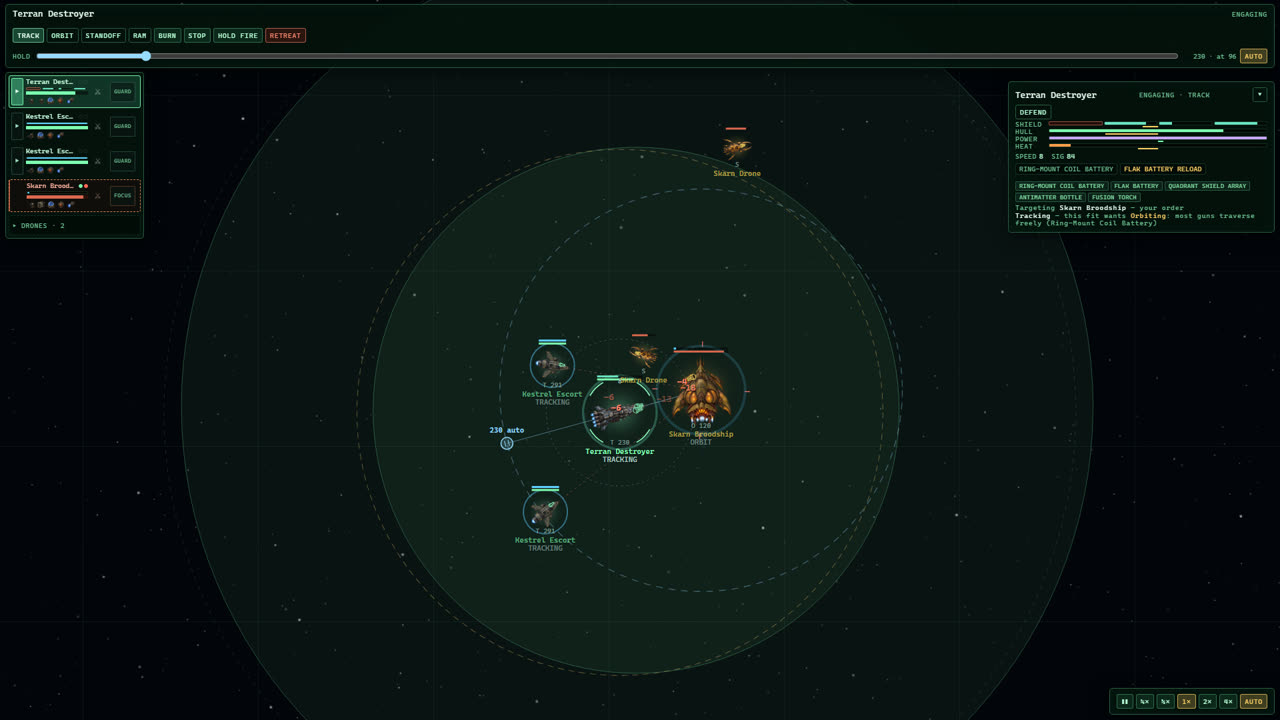
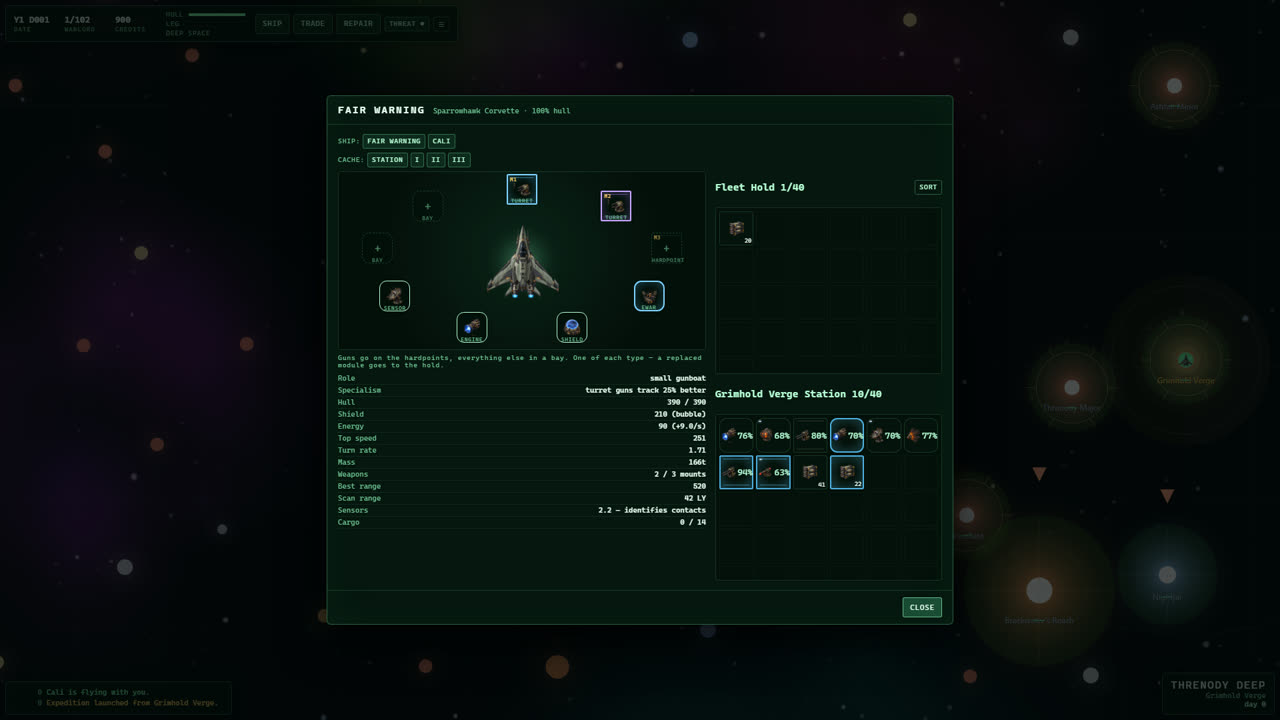
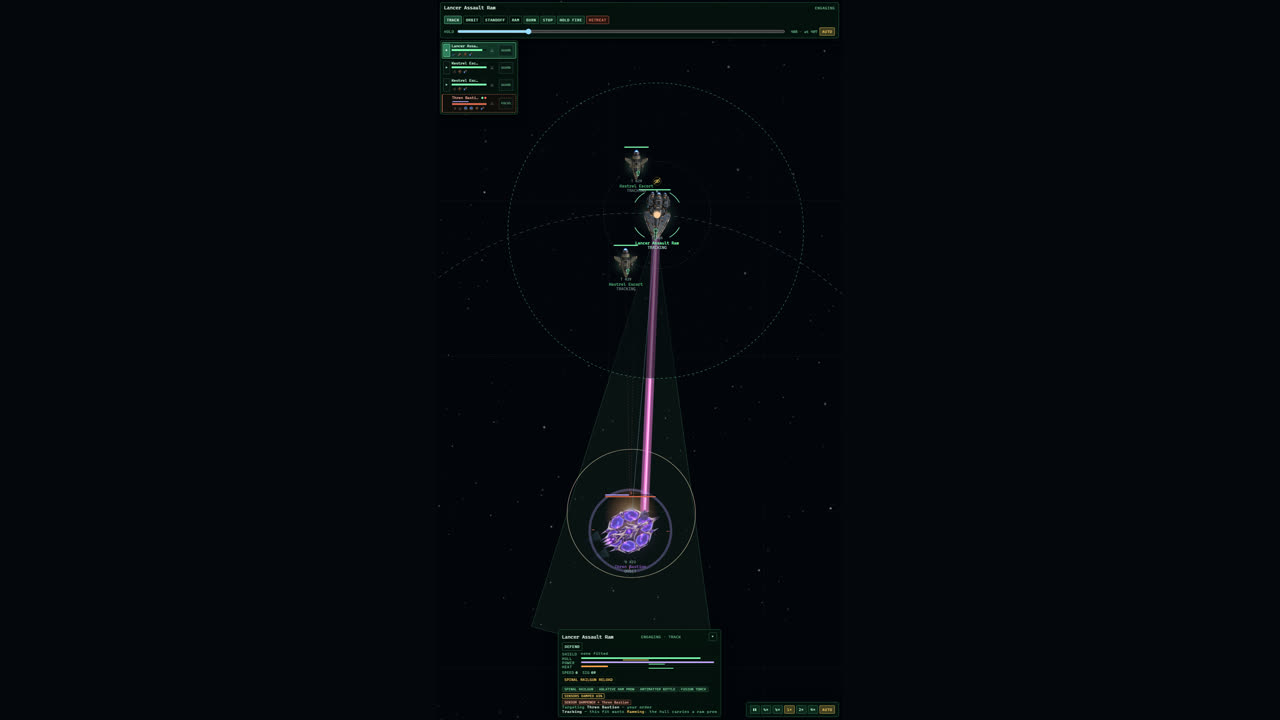
Screenshots are from an earlier build.
Humans are the newest and weakest species in the sector. The others fight with energy weapons and shields, and see human guns as museum pieces. But shields shed energy, and they have no answer to a slug moving at speed. Fly a randomised sector, refit your ship, rescue pilots mid-fight, and follow a voiced story. One build for phone, tablet and PC.
Play the free demo in your browser Android test build (email for access)No install, no account. Steam page planned; no release date yet.
The browser demo is the current test build of the game. It includes the voiced prologue, the start of the main story, and a full expedition across one randomised sector, which takes about fifteen minutes. It runs on a phone, tablet or PC with touch or mouse and keyboard. Your save stays on your device. The title screen in the demo still shows an earlier name for the game.
Recorded from an earlier build. Music from the game.
HFY is the fan-fiction genre where humanity is the underdog; the title's initials are a nod to it.
HFY is a science fiction genre that grew out of online fiction communities. In HFY stories humans are the underdog: late to space, short-lived, and armed with technology the older species gave up long ago. The stories are about how that old technology, and stubbornness, turn out to matter.
In this game that is a combat rule, not only a story. Human ships carry projectiles, railguns, fission and fusion warheads, antimatter, and cheap autonomous drone swarms. The older species use directed energy and shields. Shields are good at absorbing energy and poor at stopping mass, so the weapons they look down on are the ones that get through.
A single main story line, starting with a voiced prologue. Each star system has one location to visit. Captains, story scenes and your ship's AI all speak.
Any module fits any slot; one of each type. Fit a second shield and the first drops into the hold. Guns are the exception: a hull carries as many as it has mount points.
Webs, capacitor drains, sensor dampeners, cloaks, remote shield and armour repair. All of it works for you and against you. Ramming breaks a cloak.
Pilots are out there, losing. Keep one alive through the fight and they fly with you. Berths cap at four, so you never collect them all.
Fights run in real time with quarter- and half-speed buttons, so you can slow a fight down to read it. The campaign clock only runs while you are under way.
Touch and mouse share one input path. The same static web build runs on a phone, a tablet and a desktop, and the Android app wraps the same build.
Screenshots are from an earlier build.
The art, music, sound effects and voice lines in this game were generated with AI tools. Most were made with Asset Yard, an asset tool the developer built; 16 early ship hulls and 30 icons were made with ChatGPT. The code was written with Claude Code under the developer's direction. The design, tuning and tests are the developer's own. Nothing is generated while the game runs. No third-party characters, art, logos or other copyrighted works were used as prompts or references.
| Made with Asset Yard | Count |
|---|---|
| Voice lines (captains, story scenes, ship's AI) | 1,875 |
| Music tracks | 38 |
| Sound effects | 29 |
| Images (ship hulls, scene art, portraits) | about 145 |
The game is about 84,000 lines of TypeScript with 1,076 automated tests. It was launchable about two weeks after the first commit; there have been 453 commits and 135 numbered builds in all. If you filter out games with generated assets, this one belongs in the filter. If you want to know how it was done, the press kit lists what made what.
Linh Ngo, Binary Helix. Shipped Dangerous, a 3D space RPG, on four platforms between 2011 and 2014. Steam rates it Mostly Negative, and the lesson was to make a game that is short, readable and honest about what it is.